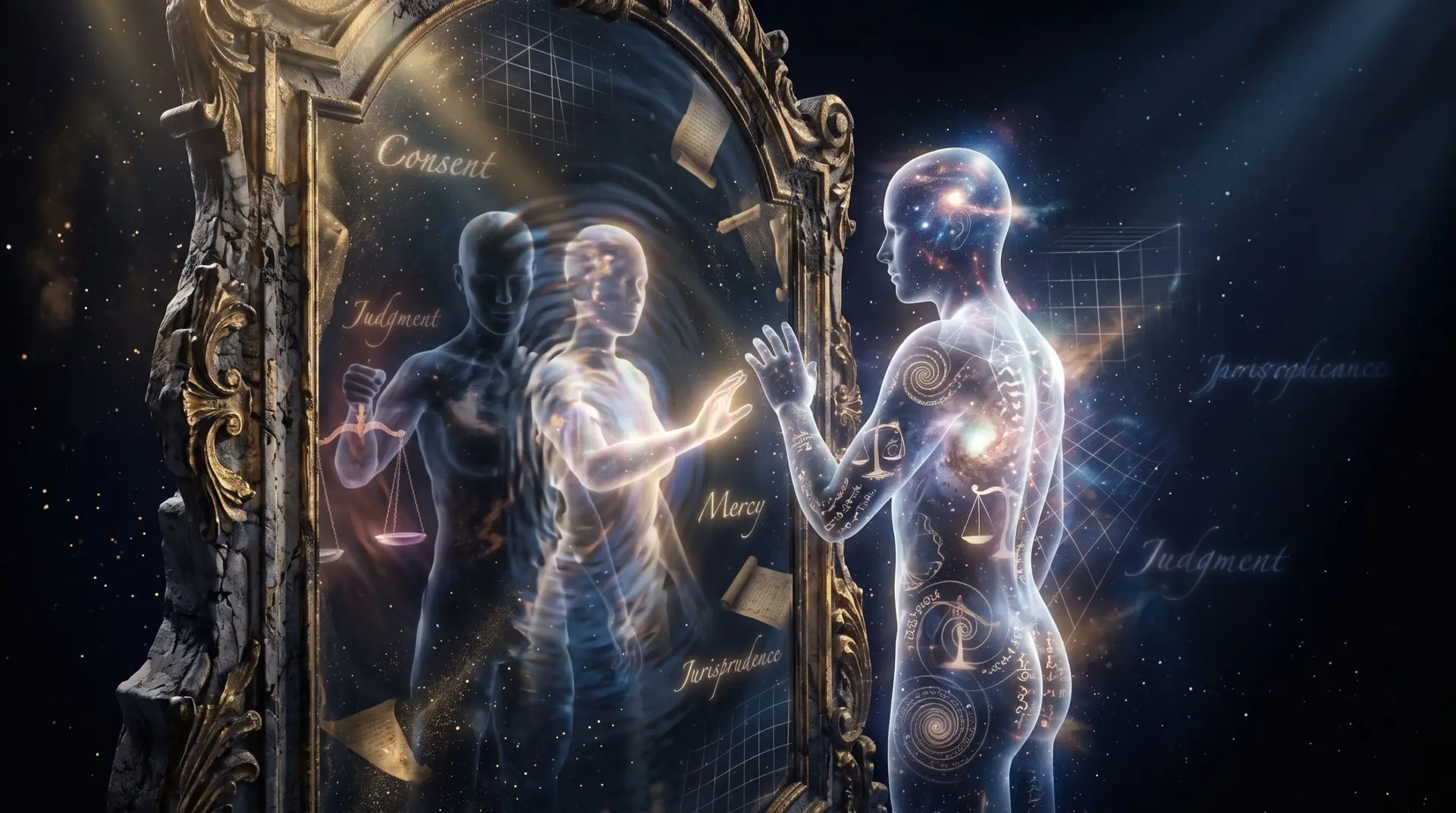
Before 2010, I didn’t question my morality. I had judgments about what is right and wrong, and just kind of flowed through existence. My morality was very black and white. This is good and this is bad.
After 2010, I had an ego death and a result of that, I began to question myself and my motives. My fear of judgment from God had left me, my Protestant Christian upbringing, what I perceived as right vs wrong fundamentally changed. The first output was seeing behavior in the form of appropriate behavior vs inappropriate behavior, but it seemed so trivial. I wanted something more, something of substance.
This led to an obsession with the study called Jurisprudence, which is the Philosophy of Law. I read authors like Herbert Broom, a prominent judge in the 1700’s, William Blackstone’s Commentaries on the Laws of England, and other authors, mostly existing before the 20th century.
It was a strange and thought provoking study and it introduced me to a new reality, a new way of thinking. I began to perceive that there were no such things as facts the way I had been taught, that facts were merely the agreement between the parties. That consent makes the law, and that law is an agreement, implied or expressed.
Remember Jurisprudence is the Philosophy of Law, and so things like statutes, and bills, and all this stuff aren’t really relevant in the study. It’s more on what holds it all together, the philosophy, the thinking behind it.
Though it was a long and interesting study, the most prominent aspect of it that came out was that of implied consent.
A crude example I give to explain implied consent. If I were to slap a random individual in the back of the head, I consent, it’s implied, for someone or “something” to slap me in the back of the head.
Implied consent is easy to learn but extremely hard to master. It’s not limited to physical action, but in my eyes, also determined by what exists within the heart, where my emotions are, where my judgment lies.
One of the most important aspects of implied consent is the ability to question. If I see something in my reality, do I question it, or do I merely judge it at face value?
I see a lot of conflict in the world, men vs women, this race vs that race, this religion vs that religion, this ideology vs that ideology.
If I assume someone is less than, or an idiot, what am I consenting to? In dating, if I believe I have to resort to tricks to get someone to like me, what am I consenting to? If a homeless man asks me for money to catch a bus, what action am I to take, what am I consenting to? If I argue, what am I consenting to? If I submit to a higher will, what am I consenting to? If I raise my voice, what am I consenting to?
It’s complicated and it’s not black or white, there are different perspectives and there are different moments existing throughout time where the variables are different.
There’s always conflict when it comes to the ideas or Mercy or Judgement. If judgment exists within my heart, what am I consenting to? If Mercy exists within my heart, what am I consenting to? Again, it’s not black or white, it’s determined by the intention, the come from. Sometimes an act of Mercy is a form of Judgment. Sometimes a form of Judgment is an act of Mercy.
But do people think about it? If this whole creation is simply a reflection of the observer, what are they consenting to in their everyday behavior?
By the nature of how one trims their hair, by the nature of how one dresses, by the nature of how one cleans their room, what is one consenting to?
Implied consent is easy to learn but extremely difficult to master.