I was driving down a two-lane road at night.
I could see that something was going on off to the right—a parked car on the shoulder. At the same time, another car was coming toward me from the opposite direction, its headlights directly in my eyes. I slowed down naturally, unable to see well. There was a lot of confusion, the usual slow-down and rubbernecking.
I eventually made it through the muck. The oncoming car passed me just as I passed the parked vehicle on the shoulder. In that brief moment, I saw someone standing right beside it on the edge of the road.
Even though I had slowed down and done exactly what I was supposed to do—and even though everybody was fine—the lack of visibility and the sudden realization that a person was right there on the dark roadside brought something up inside me.
Nothing happened.
But then, the thought popped up: That could have been bad. What if that person had been out on the road? I wouldn’t have been able to see them. That could have been really bad.
The thought brought up immediate emotion. The negative self-talk flared.
I dealt with it the way I’ve learned to.
Yes, it could have been bad. It could have been really bad.
Agreement.
And just like that, the internal turmoil stopped.
But the incident brought up memories. It reminded me of my history with negative self-talk, and what I refer to as the adversary.
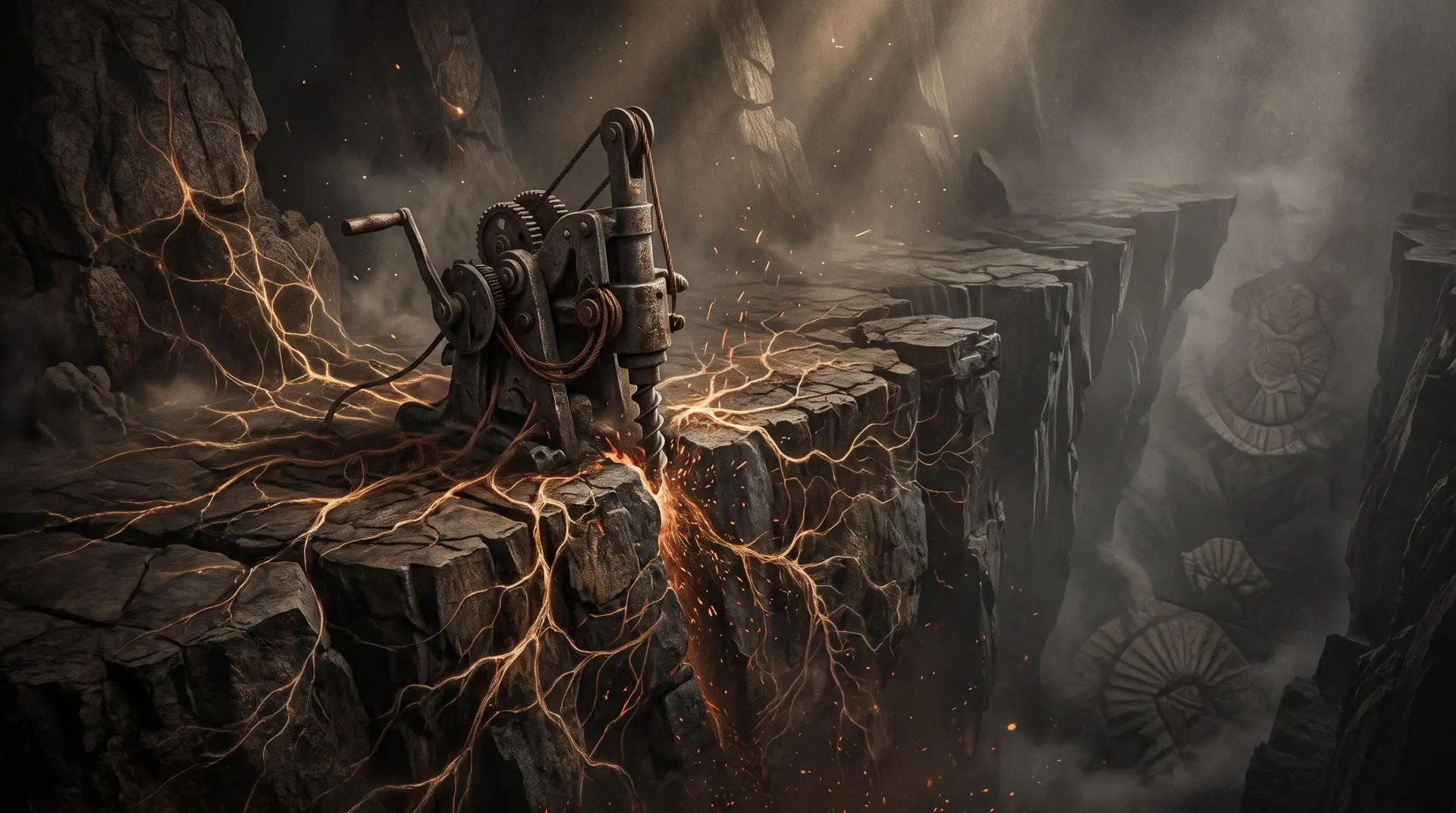
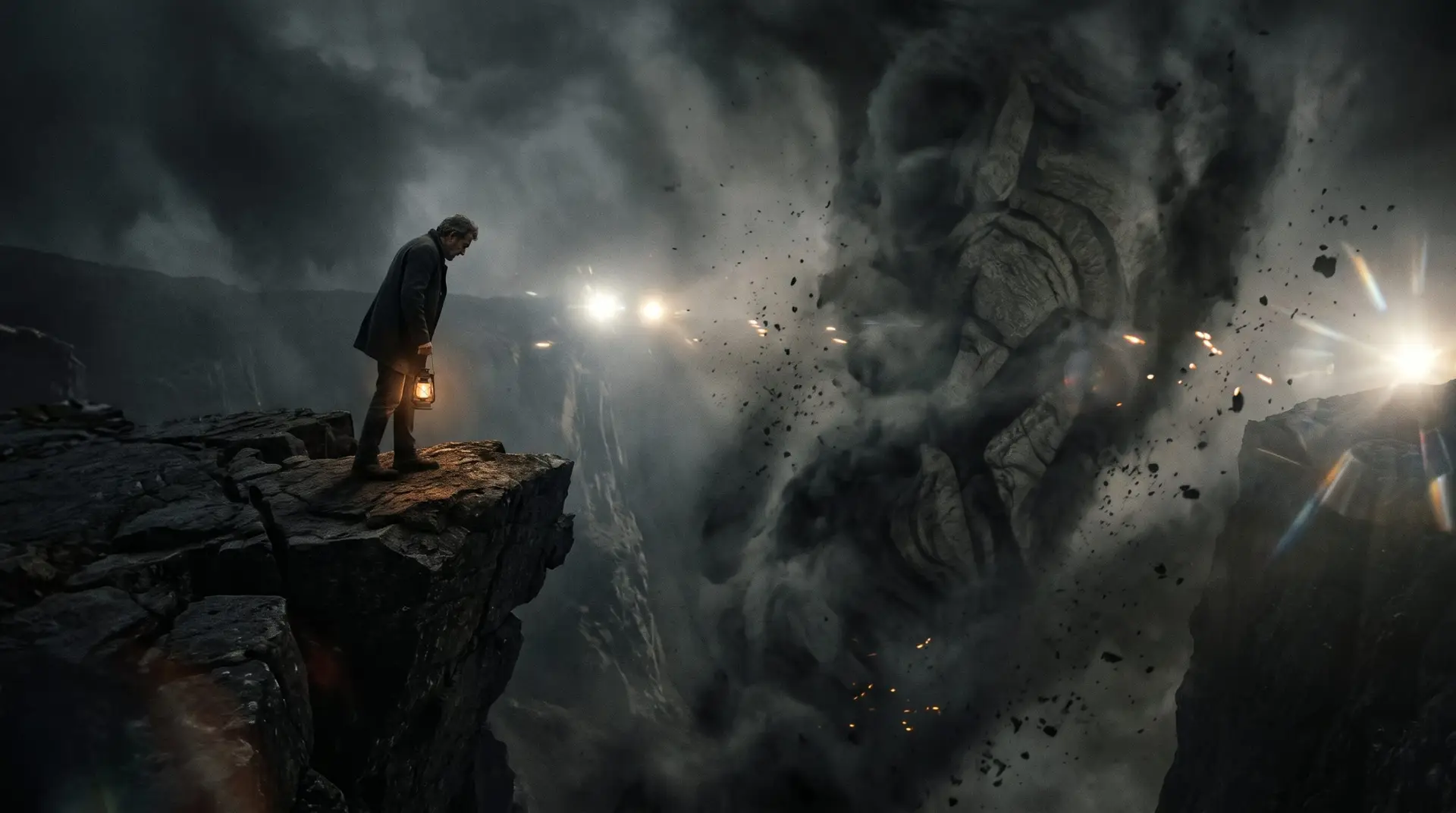
I’ve had these experiences, and usually attached to them is an aura—a kind of energetic field—accompanied by a distinct tone or vibration. Going through these experiences, I’ve realized there are levels to this. The energy is different with each layer, but the scale of that energy is always massive. I call them storms.
I realize that trying to explain my view on this is difficult, because to me, the remedy is not a word or a specific technique. It’s a relationship. How you choose to relate to this phenomenon determines the output.
I think most people I meet would buy into the whole demons-and-the-devil narrative, and tell me, “Oh, you just need Jesus…”
That’s all well and good, and if people find a remedy there—great.
Unfortunately, that rock isn’t big enough to hold me.
I don’t say that to criticize, but this phenomenon is highly complicated. What actually is it?
I am reminded of the story of Jesus going into the wilderness and his interaction with the devil. In that story, the devil was essentially a voice in his head. It’s a very real experience. To speak of “spiritual warfare” is closer to what is actually happening, but the traditional view of it—the battle for souls and all that—seems like a fairy tale to me. There can be an aspect of reality to it, meaning it can be experienced as real, but it is not the ultimate reality.
There are countless techniques out there for overcoming internal negativity. I’ve learned them all: being nice to myself, shamanic exercises where you literally change the “tone” of the voice to make it less serious, EFT, NLP, CBT, affirmations.
Do they help? Certainly, they can.
But there is always another level.
In my view, this phenomenon is a necessary component of identity. The remedy isn’t trying to conquer or overcome it; it’s the scope of your relationship with it.
The problem is, this isn’t a one-size-fits-all situation. A solution for one person might be a problem for another. There are layers, and the rules change as you change.
I mention this idea of having a “rock” to stand on. In my eyes, that’s what this entire experience is about. Instead of seeing it as spiritual warfare, I think a much better model is Spiritual Evolution. In order for growth to take place, there must be a level of friction, a level of stress.
People get caught up in wondering if this adversary is separate from them, believing it is literally a demon or the devil. In my model, there is nothing separate from me—and that includes other people. This entire existence is a reflection I am navigating, constantly showing me who I am.
So, it’s a relationship with the adversary, who is not my enemy. The adversary is important. You could call it a servant of God, and I think that’s a constructive way to view it. Its goal is to move you to a higher level of truth—to force you to find a stronger rock to stand on. This process never really stops; there is always another level. At the same time, we actually need this friction to have a personality, an ego. It is a necessary component of identity.
The key to it all is your relationship with it.
While I can list techniques, a solution for one is a problem for another. But some that I have found useful include:
- Saying thank you to it: “Thanks for pointing that out.”
- Repeating what it says: “Something bad could have happened.” “Yes, something bad could have happened.”
- Accepting the emotion instead of fighting it: This goes back to my model that thoughts are generated by emotion. If you learn to love the energy itself and stop fighting it, it has no energy to fight back with you.
- The idea of Implied Consent: This has to do with holding it to a higher law
- The Logos: Relying on the logic and reasoning of your model of reality—ultimately, the “rock” on which you stand.
If your rock is strong, you cannot be pushed or pulled by this phenomenon. At the same time, that is the exact reason it exists: to help you find a stronger rock when your current model has holes in it or has become obsolete.
It is there to help you, as frustrating as it may seem.